

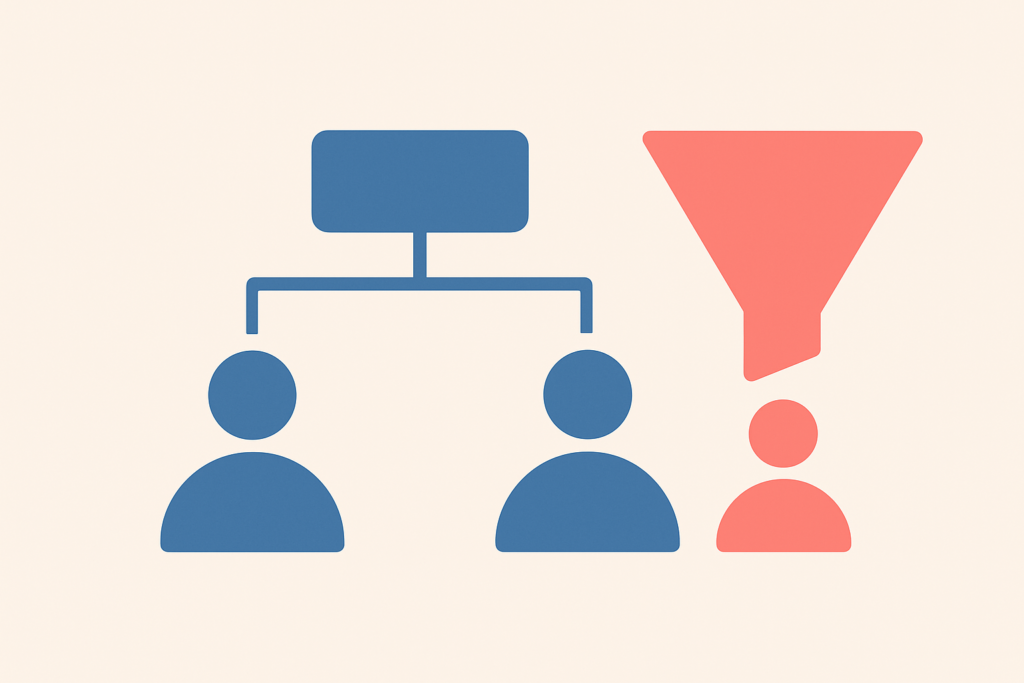
Small accounts usually do not fail because Google Ads “doesn’t work”. They fail because the budget is split across too many campaigns, too many keywords, and too many decisions made too early. If you are running Google Ads on a small budget, structure matters more than scale.
The goal is not to build the most complete account. The goal is to build an account that can collect usable signals, spend money in the right places, and give you enough clarity to make the next decision. That is the difference between an account that learns and one that drifts.
Why too many campaigns starve a small budget
The most common mistake in google ads small budget setups is fragmentation. A small business launches separate campaigns for every service, every location, every product variation, and every match type. On paper that looks organised. In practice, each campaign receives too little spend to generate reliable search term data, conversion signals, or clear performance patterns.
When budget is limited, each campaign needs a reason to exist. If two services share the same intent, landing page path, and conversion action, splitting them too early often creates more noise than control.
What to consolidate first
Start with the smallest structure that still preserves intent. For most small advertisers, that means:
- One Search campaign for your highest-intent core offer
- One ad group per tightly related keyword theme
- One primary conversion action that reflects a real lead or sale
- One landing page per intent group, not per keyword
For example, if you are a service business offering bookkeeping, payroll, and tax support, do not begin with nine campaigns divided by service and match type. Start with one Search campaign and separate ad groups only when the search intent is meaningfully different. Someone searching for “bookkeeping service for small business” is close enough in intent to keep in the same commercial theme as “outsourced bookkeeping service”. Someone searching “what does a bookkeeper do” is not.
A useful rule: if a campaign cannot spend enough in a week to show you what search terms triggered it and whether those terms produce conversions, it is probably too granular for the current budget.
How much structure is enough?
Use structure to support decisions, not to impress yourself in the interface. Ask these questions before creating a new campaign:
- Does this segment need its own budget control?
- Does it need a different bidding strategy?
- Does it target a different geography, language, or schedule?
- Does it require a different landing page journey?
If the answer is no to all four, keep it in the existing campaign.
This also applies to location splits. If you serve multiple nearby areas but the same team handles all leads, the same page converts them, and user behaviour is similar, start with one campaign and use location reporting before splitting by city. N2MU works across the Caucasus, Türkiye, Europe and Israel through hybrid coordination hubs in Tbilisi, İzmir and Cebu, and one lesson carries across markets: over-segmentation creates reporting comfort but weakens optimisation when budgets are lean.
If you want a broader view of how account design fits into channel planning, a related performance planning article can sit here: C02.
Match types in 2026
Match types still matter, but not in the old “build three versions of every keyword” way. Exact match is no longer literal-only, phrase match captures wider variants than many advertisers expect, and broad match can work well in the right conditions but can also waste spend fast when the account lacks conversion data.
For a small budget, the priority is controlled reach. That usually means starting with exact and phrase for core commercial intent, then expanding only after you understand actual query behaviour.
A simple starting framework
Use three buckets:
- Exact match for your highest-intent terms
- Phrase match for close commercial variations
- Broad match only if you have strong negatives, a clear conversion path, and enough signal for bidding to learn
Example keyword set for a local legal service:
- Exact: [employment lawyer for small business]
- Phrase: “employment lawyer for business”
- Phrase: “hr legal advice for employers”
That is enough to start. You do not need twenty near-duplicates on day one.
What to exclude from the start
Small budgets benefit from an aggressive negative keyword habit. Build a starter negative list before launch, especially for searches that indicate research rather than purchase intent. Typical examples include:
- free
- jobs
- course
- salary
- definition
- template
- DIY
- used
Then review the search terms report on a fixed cadence. In the first two weeks, checking every two to three days is reasonable if traffic volume is modest. Add negatives at the ad group or campaign level based on intent, not irritation. If a term is irrelevant everywhere, block it at campaign level. If it only conflicts with one ad group’s theme, exclude it there.
When broad match is appropriate
Broad match can be useful for discovery, especially when paired with strong conversion tracking and a bidding strategy designed to optimise toward qualified outcomes. But in ppc for small business, broad match is often introduced too early. If you do not yet know which search patterns bring useful leads, broad match increases uncertainty.
A better sequence is:
- Launch with exact and phrase around proven commercial terms
- Use search term data to identify converting patterns
- Expand into carefully selected broad themes later
That sequence gives you something more valuable than reach: context.
If your business also depends on channel mix decisions beyond search ads, another useful supporting resource can sit here: C03.
Choosing a bidding strategy before you have data
Bidding mistakes are often structure mistakes in disguise. Advertisers pick an automated strategy because it sounds efficient, but the account has too little conversion data to guide that automation. The result is unstable delivery, uneven CPCs, and weak lead quality.
Before choosing a bidding strategy, define what the platform should optimise for. A form submit, booked call, checkout, or qualified lead event can all be valid, but they are not interchangeable. If the account is counting low-intent actions such as page views, long time on site, or button clicks as conversions, bidding will optimise toward cheap activity instead of business outcomes.
Practical starting points for small budgets
For many new accounts, there are two sensible options:
- Manual CPC or a tightly monitored enhanced CPC approach when you need control and have limited signal
- Maximise Conversions when tracking is reliable and the conversion action reflects real commercial value
There is no universal right answer. The right choice depends on traffic volume, lead quality feedback, and conversion tracking accuracy.
If you are a local service business generating a small number of weekly enquiries, starting with Manual CPC can help you control where spend goes while you clean up search terms and negatives. If you are an ecommerce advertiser with cleaner purchase tracking, Maximise Conversions can make sense earlier because the feedback loop is tighter.
What not to do too early
- Do not set a target CPA before you understand your normal lead flow
- Do not switch bidding strategies every few days
- Do not compare strategies without holding other variables steady
- Do not optimise for a micro-conversion just because it happens more often
A common early-stage workflow is to pick one strategy, let it run long enough to gather signal, then review against actual business feedback. If leads are irrelevant, the issue may be keyword intent or landing page friction, not bidding alone.
Use one primary conversion, keep secondary actions separate
In small accounts, reporting clarity matters. Choose one primary conversion for bidding whenever possible. Keep secondary actions visible for analysis but do not necessarily include them in the main optimisation goal.
For example:
| Action | Track it? | Use for bidding? |
|---|---|---|
| Qualified lead form | Yes | Yes |
| Phone call over a meaningful duration | Yes | Possibly, if quality is confirmed |
| Newsletter signup | Yes | No |
| Page scroll | Maybe | No |
This is where a lot of google ads small budget accounts go wrong. They ask the system to optimise before they have defined what success looks like in operational terms.
Landing page decisions that change CPA
When budgets are tight, your landing page has to do more work. You cannot afford to pay for irrelevant clicks and then ask visitors to figure things out on their own. Small changes in message clarity, form friction, and trust signals can change CPA more than another round of bid adjustments.
Match the page to the query, not just the brand
Many small businesses send all paid traffic to the homepage. That creates unnecessary drop-off. A homepage tries to explain the entire business. A paid landing page should help one visitor solve one problem.
If someone searched for “emergency plumber weekend service”, the page should immediately confirm:
- what service is offered
- where it is available
- how to contact you now
- what happens next
Do not hide the core action below general company information. Put the primary action near the top of the page, then support it with detail.
Reduce the number of decisions on the page
On a small-budget campaign, every click is relatively expensive because there are fewer chances to average out weak visits. Remove options that distract from the conversion path:
- Trim navigation if possible
- Use one primary CTA
- Keep forms to the minimum fields needed for follow-up
- Repeat the CTA after key proof points
A practical test: if the visitor can land on the page and understand the offer, proof, and next step within a few seconds, the page is probably clear enough to test. If they need to scroll through your full company story first, it is probably not.
Qualify leads without adding friction everywhere
Lower CPA is not always better if lead quality falls. The better approach is to qualify where it matters most. A service provider, for example, might include pricing cues, service-area confirmation, or project minimums on the page. That can reduce unqualified submissions before the sales team spends time on them.
We have seen this pattern in sectors from home services to B2B operations: when the page clearly states who the offer is for and what the engagement looks like, the account gets cleaner conversion data. That improves future bidding decisions because the system receives better outcome signals.
What to check before changing bids
Before lowering bids or pausing keywords, review the landing page for these issues:
- Slow mobile load
- Weak headline-to-keyword match
- Form too long for the offer value
- No visible trust elements such as reviews, certifications, process clarity, or case examples
- No local or sector relevance on the page
If you need help aligning media buying with conversion experience, a service page link can sit naturally here: /services.
The first 30 days: what to change and what to leave alone
The first month is where many small accounts become unstable. Someone sees a few expensive clicks, then changes bids, rewrites ads, swaps landing pages, adds broad match, and pauses half the keywords. A week later, there is no clean read on what caused what.
The purpose of the first 30 days is not to perfect the account. It is to establish signal quality.
What to change in the first 30 days
- Search terms: add negatives regularly and identify new exact or phrase opportunities
- Ads: improve weak message alignment if the ad does not reflect the query clearly
- Landing page friction: fix obvious blockers such as missing CTA clarity, broken forms, or mobile layout issues
- Geo settings and schedules: refine only if early data shows obvious waste
These are structural hygiene moves. They improve efficiency without resetting the account every other day.
What to leave alone long enough to learn
- Bidding strategy, unless tracking is broken or spend is clearly misdirected
- Core campaign architecture, unless you launched with major overlap
- Primary conversion definitions, unless they were wrong from the start
A stable observation window matters. If you keep changing multiple variables at once, you lose the ability to interpret performance.
A workable first-month review rhythm
For a modest account, this cadence is usually practical:
- Days 1-7: confirm tracking, review search terms, catch obvious waste, check page function on mobile
- Days 8-14: expand negatives, review ad relevance, verify that conversions are meaningful
- Days 15-21: compare keyword themes, pause clear mismatches, adjust copy if intent is being misread
- Days 22-30: decide whether the current structure can scale, or whether one theme deserves its own campaign
This is the point where account structure earns its keep. If one ad group consistently attracts stronger intent and cleaner conversions, give it more separation. If performance is too thin everywhere, simplify further rather than adding layers.
How to know the account is ready for expansion
Expand only when you can answer these questions with confidence:
- Which queries are producing qualified leads or sales?
- Which landing page message converts best for those queries?
- Which negative themes should be blocked permanently?
- Does the current budget actually support another campaign split?
If you cannot answer those questions yet, the next best move is usually not expansion. It is better signal collection.
Google ads small budget success comes from concentration, not complexity. Keep the structure tight, match intent carefully, choose bidding based on real tracking, and protect the first month from unnecessary changes.
If you want a clearer paid search structure for your business, Let’s talk.