
As we approach 2026, artificial intelligence has become an integral part of creative agencies, transforming how ideas are conceived, developed, and delivered. This article delves into the sophisticated role AI plays in the creative process, offering a window into a future where human imagination intersects with machine precision.
AI-Driven Innovation in Creative Agencies
By 2026, artificial intelligence (AI) has emerged as a transformative element within the realm of creative agencies, fundamentally altering how content is created, refined, and distributed. The infusion of generative AI into the core operations of these agencies signifies a paradigm shift from traditional methodologies to more dynamic, innovative processes that blend human creativity with machine efficiency.
Generative AI, particularly, has seen extensive application in the creation of text, images, and videos. This technology has enabled creative agencies to produce high-quality, original content at a pace and volume previously unimaginable. For instance, AI-driven systems can now generate draft articles, marketing copy, and even complex narratives tailored to specific audiences, themes, or styles, thereby significantly reducing the time and effort required for content development. In the visual realm, generative AI tools are capable of producing unique images and videos that meet precise specifications, such as brand guidelines and visual aesthetics, while also ensuring that the content is engaging and primed for audience interaction.
The impact of AI on design processes within creative agencies is equally profound. AI-powered design tools assist in the rapid creation and iteration of visual concepts, enabling designers to explore a broader spectrum of possibilities without the constraints of time or manual labor. These tools can automatically adjust designs based on user feedback or A/B testing results, making the optimization process more efficient.
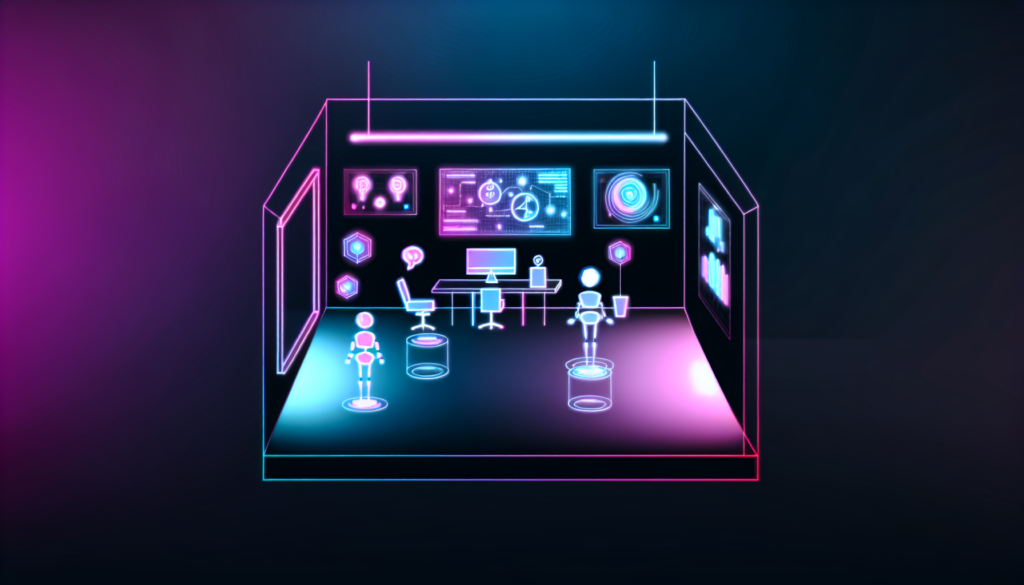
Brainstorming sessions and project management in creative agencies have also been enhanced through AI applications. AI models serve as virtual collaborators, offering new ideas, suggesting improvements, and identifying potential issues in real-time. This collaboration between human and artificial intelligence brings a level of creativity and efficiency to projects that was previously unreachable.
However, the integration of AI into creative processes also raises significant ethical considerations. Intellectual property laws are challenged by the emergence of AI-generated works, creating a grey area around copyright and originality. The question of whether AI can truly “create” or if it is merely replicating and recombining existing human-made works is a hotly debated topic. Furthermore, the use of AI to generate content without explicit permission from the original creators of the data it was trained on continues to be a contentious issue, necessitating clear guidelines and ethical standards.
In conclusion, while AI-driven innovation in creative agencies has unlocked new levels of creativity and efficiency, it also necessitates a careful examination of the ethical implications of these advancements. As agencies navigate this new landscape, finding a balance between leveraging AI’s capabilities and respecting artistic integrity and copyright will be crucial.
Conclusions
The integration of AI into creative agencies by 2026 has significantly advanced the capabilities of artists and designers. In the synergy of human creativity and AI’s computational prowess, innovative masterpieces are crafted faster and more effectively. Nonetheless, this melding of worlds is not without its challenges; it invites ongoing dialogue on ethics and sustainability in the digital art era.